
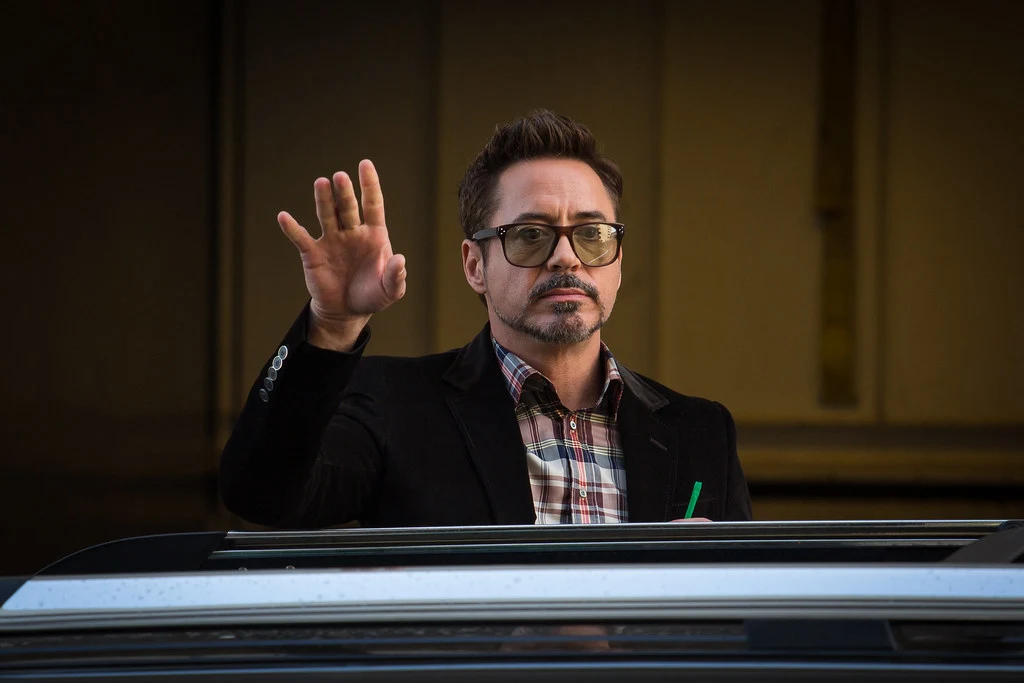
Robert Downey Jr.: Life Is Painful and Messy—But That’s What Makes It Worth Living
Hollywood icon Robert Downey Jr. has never shied away from the harsh realities of existence. According to the Oscar-winning actor, life is inherently “painful and messy and hard”—yet despite all its chaos, it remains profoundly worth living. This is not merely a soundbite; it is a philosophy forged through decades of spectacular highs, devastating lows, and one of the most remarkable comebacks in entertainment history.
The Discipline of Respect
For Downey Jr., discipline is not about rigid routines or self-punishment. He defines it as an act of deep respect—not merely self-respect, but respect for life itself and every opportunity it presents. This perspective reframes discipline not as a burden, but as a gratitude-driven commitment to showing up fully for whatever comes your way.
Fear the Middle, Not the Bottom
Perhaps most revealing is what truly terrifies him. Downey Jr. claims he is not afraid of failure—he does not believe it will happen to him. He is not afraid of success either, noting that it is “better than failure.” What haunts him is mediocrity. The idea of settling into the middle ground, of becoming average, scares him far more than any public stumble ever could.
From Child Star to Rock Bottom
Born Robert John Downey Jr. on April 4, 1965, in New York City, he grew up in Greenwich Village’s artistic underground. His father, an avant-garde filmmaker, cast him in his first role at age five. After dropping out of high school in California, he returned to New York to pursue acting, landing early parts in films like Weird Science (1985) and joining the cast of Saturday Night Live.
His breakthrough arrived with Chaplin (1992), earning him an Academy Award nomination for Best Actor. But parallel to his rising stardom, substance abuse was tightening its grip. By 1999, he hit rock bottom with a three-year prison sentence for parole violations—a moment that could have ended his career permanently.
The Long Road Back
Released early in 2000, Downey Jr. began the painstaking work of rebuilding. He won a Golden Globe for Ally McBeal, but further arrests proved his recovery was still fragile. By 2003, however, he committed to a true resurgence, taking on challenging roles in The Singing Detective, Good Night, and Good Luck, A Scanner Darkly, and Zodiac.
Then came 2008. Cast as Tony Stark in Iron Man, he launched not just a franchise but an entire cinematic universe. That same year, his fearless performance in Tropic Thunder earned him another Oscar nomination. He became the anchor of the Marvel Cinematic Universe through The Avengers, Captain America: Civil War, and the record-shattering Avengers: Endgame (2019), becoming one of Hollywood’s highest-paid stars in the process.
The Artist’s Return
After stepping away from blockbusters, Downey Jr. delivered a masterclass in restraint and power with his portrayal of Lewis Strauss in Christopher Nolan’s Oppenheimer (2023)—a performance that finally won him the Academy Award for Best Supporting Actor, along with a Golden Globe. In 2024, he earned an Emmy nomination for his work in the HBO series The Sympathizer.
A Life That Proves the Philosophy
Downey Jr.’s belief that even “bad years are still good years” is not abstract wisdom—it is survival logic learned through experience. His equation of discipline with respect mirrors the daily commitment required to overcome addiction. His terror of mediocrity explains why, even at the pinnacle of commercial success, he continues to seek out complex, demanding roles.
From a five-year-old in his father’s experimental films, to a prisoner, to Iron Man, to an Oscar winner—his journey embodies the very idea that life’s messiness, when met with discipline and respect, can transform into something extraordinary.